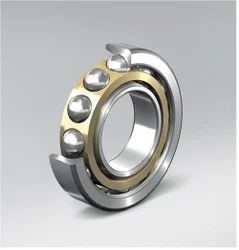
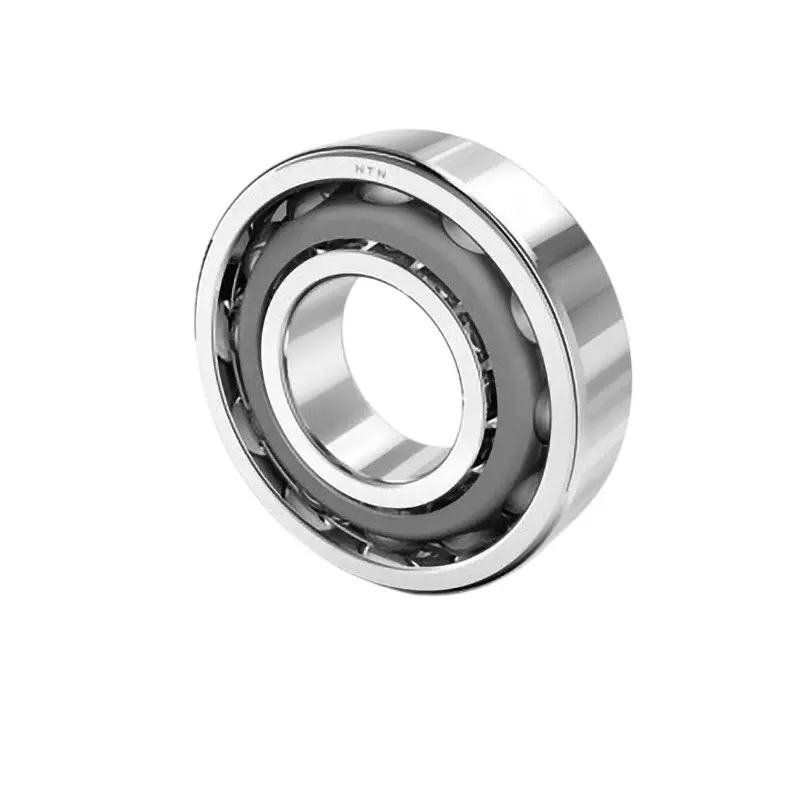
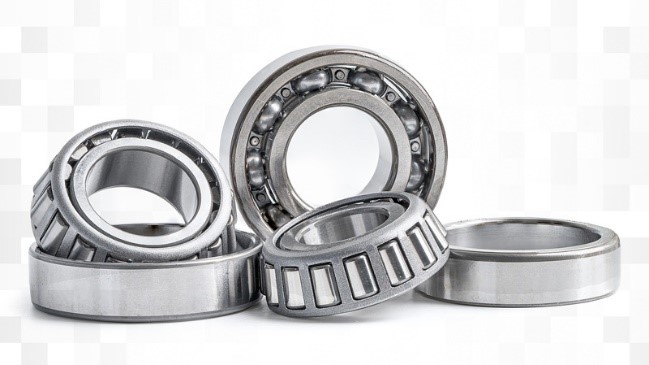
Angular Contact Ball Bearing is a rolling-element bearing designed to support both radial and axial loads, particularly in applications requiring high speed, precision, and rigidity. It is commonly used in machine tool spindles, electric motors, pumps, compressors, gearboxes, robotics, and other high-speed industrial machinery.
Shree Balaji Export is a trusted manufacturer, supplier and exporter of precision-engineered angular contact ball bearings and a comprehensive range of industrial bearing solutions. Serving customers in Sri Lanka, South Africa, the UAE, Nigeria, Egypt, Indonesia, Thailand, Kuwait, and markets worldwide, the company combines rigorous quality assurance, certified manufacturing partnerships, and reliable global logistics to deliver bearings that perform consistently in the most demanding real-world operating conditions. Whether your requirement is a standard 7205 B single-row unit, a factory-matched DB pair for a machine tool spindle, or a super-precision P4 grade bearing for a high-speed drive, Shree Balaji Export has the product depth, technical expertise, and global supply capability to fulfil your order — correctly specified, competitively priced, and delivered on time.
| Material | Stainless Steel |
|---|---|
| Bore Size | 60 mm |
| Number Of Rows | Single Row |
| Width | 82.6 mm |
| Surface Finishing | Polished |
| Model No | QJ212-MPA |
| Shape | Round |
| Brand | FAG |
What Is an Angular Contact Ball Bearing?
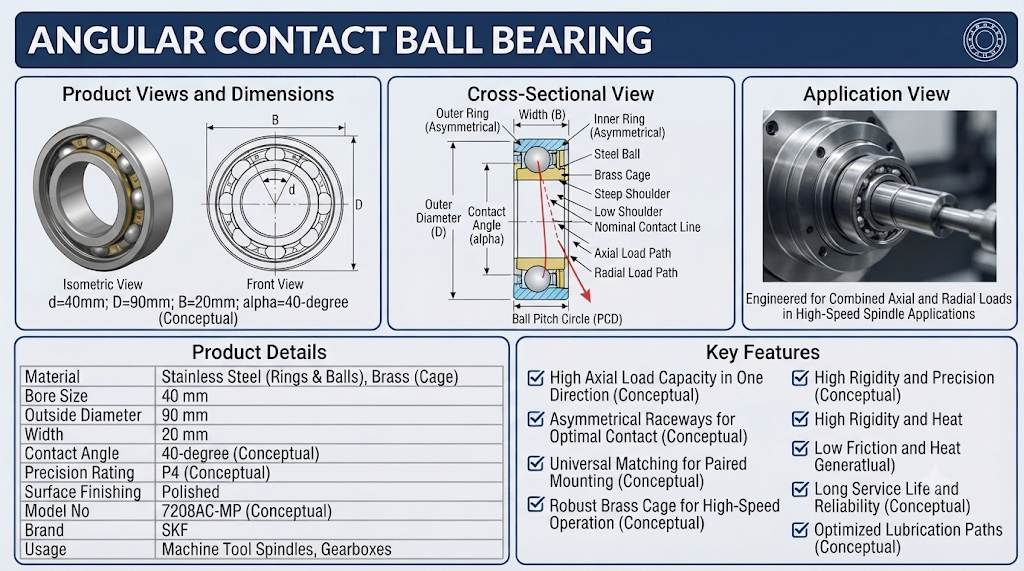
Angular contact ball bearings are types of bearings that can handle two kinds of loads simultaneously. These include radial loads, which are forces that push against the shaft from the side, and axial loads, which are forces that push along the shaft axis. What makes angular contact ball bearings different from deep groove ball bearings is their construction. The inner ring, outer ring, and ball elements are designed so that the line where the ball touches the two rings is not straight up and down but angled. This angle, which is usually 15 degrees, 25 degrees, or 40 degrees, is what makes angular contact ball bearings unique. A smaller angle, like 15 degrees, is better for applications that require high-speed rotation and encounter more radial loads.
A larger angle, like 40 degrees, is more suitable for applications that need to handle significant loads and provide high strength. The 25-degree angle serves as a middle ground and is commonly used in general industry and automotive parts. Due to the way angular contact ball bearings are designed, they generate a force that pushes the rings apart when a radial load is applied. Therefore, angular contact ball bearings are typically used in pairs, either back to back or face to face, to limit excessive shaft movement. Angular contact ball bearings have an angle that determines their ability to handle axial and radial loads. Selecting the correct angle is crucial, much like choosing the right size.
Types of Angular Contact Ball Bearings and Common Sizes
There are various types of angular contact ball bearings, each designed for specific loads, mounting orientations, and speeds.
1. Single Row Angular Contact Ball Bearings
The single row angular contact ball bearing is the most common type. It features one row of balls that run between the outer rings at an angle. Because it can only handle forces in one direction, it is always paired with another bearing mounted opposite to accommodate forces in both directions. Single-row bearings are used in machine tools, gearboxes, pumps, and compressors.
2. Double Row Angular Contact Ball Bearings
The double row angular contact ball bearing consists of two rows of balls in one housing, set at opposite angles. This design allows it to handle forces in both directions and significant radial loads independently, without requiring an additional bearing. It is stronger and can support more load than a single-row bearing, making it ideal for steering gears, gearbox output shafts, and wheel hub bearings in cars and trucks.
3. Four-Point Contact Ball Bearings
The four-point contact ball bearing is a type of angular contact ball bearing where each ball touches both rings at four points. This unique design enables it to manage loads from both directions within a single, compact unit, making it suitable for applications where space is limited but bidirectional thrust loads are necessary. It is used in slewing rings for excavators, wind turbine pitch control drives, and medical imaging equipment.
4. Matched Bearing Pairs
To assist with applications requiring paired single-row bearings, angular contact ball bearings are available as factory-matched pairs that are made to specifications:
- Back-to-Back: The two bearings are mounted with their wide faces outward, providing maximum moment stiffness. This configuration is beneficial for machine tool spindles and precision drive shafts.
- Face-to-Face: The bearings are mounted with their narrow faces outward, offering angular misalignment tolerance. This setup is preferred when shaft or housing alignment is not ideal.
- Tandem: Both bearings are oriented in a way that doubles the axial load capacity in one direction. This configuration is used in applications with heavy unidirectional thrust loads, such as high-load screw drives and hydraulic pump shafts.
5. Super-Precision Angular Contact Ball Bearings
Super-precision angular contact ball bearings are manufactured to achieve very high precision, meeting precision class standards. They are utilized in demanding speed and high-accuracy applications, including CNC machining centre spindles, grinding machine spindles, and precision instrument drives, where dimensional accuracy is critical and operating speeds can be exceptionally high.
Common Sizes and Contact Angle Series
| Series | Bore Range (mm) | Typical Contact Angle & Use |
|---|---|---|
| 7200 B/C Series | 10 – 80 mm | 15° / 25° — motors, light gearboxes, pumps |
| 7300 B/C Series | 10 – 120 mm | 25° / 40° — gearboxes, compressors, heavier drives |
| 7000 C/CD Series | 10 – 50 mm | 15° — high-speed spindles, precision instruments |
| 3200 / 3300 Series (double row) | 10 – 100 mm | 30° — wheel hubs, steering, bidirectional thrust |
| QJ Series (four-point) | 20 – 200 mm | 35° — slewing drives, bidirectional axial loads |
| H7 Super-Precision Series | 10 – 120 mm | P4/P2 grade — CNC spindles, precision drives |
Benefits of Using a Quality Angular Contact Ball Bearing
When you choose a quality Angular Contact Ball Bearing from a trusted supplier like Shree Balaji Export you will see a big difference in how well your machine works. This is because Angular Contact Ball Bearings have advantages that affect how precise, reliable and cost effective your machine is:
- Angular Contact Ball Bearings can handle loads from many directions at the same time: One of the things about Angular Contact Ball Bearings is that they can handle loads that are coming from the side and from the front and back all at the same time. This is something that other types of bearings cannot do well. Because of this engineers can use one Angular Contact Ball Bearing of two separate bearings.
- Angular Contact Ball Bearings are very stiff: The way that Angular Contact Ball Bearings are made gives them a lot of stiffness. This means that they do not move around much when force is applied to them from the front and back. This is very important in machines that need to be very precise like machine tool spindles and precision drive systems. Even a small movement can affect the quality of the work.
- Angular Contact Ball Bearings can spin fast: The inside of Angular Contact Ball Bearings is designed to spin very quickly. The parts are made to be very precise. The cage is designed to have very little drag. This means that Angular Contact Ball Bearings can be used in things like electric motors, turbines and spindles.
- Long and Predictable Service Life: Angular Contact Ball Bearings are made from very strong steel and the parts are made to be very precise. This means that they will last a time and you can predict when they will need to be replaced. This allows you to plan when you will do maintenance of having to fix things when they break.
- Angular Contact Ball Bearings are very precise: The parts of Angular Contact Ball Bearings are made to be very precise. This means that they will always be in the position, which is very important in machines that need to be very precise like CNC machines, robots and precision assembly equipment.
- Angular Contact Ball Bearings can be used in different ways: There are many different ways that Angular Contact Ball Bearings can be used. They can be paired together in ways to meet the needs of different applications. This gives engineers a lot of flexibility when they are designing machines.
- Angular Contact Ball Bearings can save you money: Because Angular Contact Ball Bearings can handle loads from directions at the same time they can simplify the design of machines. This can reduce the number of parts that are needed which can save money over the life of the machine. Using Angular Contact Ball Bearings can really make a difference in how your machine works and how much it costs to run. Angular Contact Ball Bearings are a choice, for many different applications.
Where Flexible Roller Bearings Are Used Across Our Export Markets
- Sri Lanka: Tea and rubber processing lines use self-aligning mounted bearings on long conveyor shafts that flex slightly under continuous load.
- South Africa: Mining screens and crusher feeders rely on spherical self-aligning bearings to handle constant vibration and heavy shock load.
- UAE: HVAC fan shafts and building service pumps use flexible pillow block units where perfect factory alignment is hard to guarantee on site.
- Nigeria: Generator cooling fans and borehole pump shafts use self-aligning units to keep running despite uneven foundation settling.
- Egypt: Irrigation pump stations and textile machinery use flexible insert bearings on shafts that see frequent start-stop cycles.
- Indonesia: Palm oil mill conveyors and crushing lines use spherical roller units to survive constant vibration and heavy, shifting load.
- Thailand: Rice mill and packaging line conveyors use flange-mounted flexible units where shafts pass through multiple support walls.
- Kuwait: Oil and gas site conveyors and cooling fan shafts use self-aligning bearings to handle heat, dust, and small structural movement.
- Worldwide: Wherever a shaft is long, a frame flexes under load, or perfect alignment is hard to achieve, a self-aligning bearing keeps the machine running safely.
Industry Applications of Angular Contact Ball Bearings
The unique load-handling capability of the angular contact ball bearing has made it the bearing of choice across a wide range of demanding industrial sectors. Shree Balaji Export serves customers across all of the following industries — from precision manufacturers in the UAE and Thailand to heavy industrial operators in Nigeria and South Africa:
| Industry Sector | Angular Contact Ball Bearing Application |
|---|---|
| Machine Tools & CNC Machining | Spindle bearings in turning centres, milling machines, grinding spindles, boring bars |
| Automotive & Commercial Vehicles | Wheel hub assemblies, gearbox countershafts, alternators, power steering pumps, differentials |
| Pumps & Compressors | Centrifugal pump shafts, screw compressor rotors, vacuum pump drives, multistage pump stages |
| Electric Motors & Generators | High-speed motor end shields, servo motor shafts, generator shaft support |
| Agricultural Machinery | High-load gearbox drives, harvester threshing cylinder bearings, rotary tiller shafts |
| Construction Equipment | Hydraulic pump shafts, concrete mixer drives, crane wire drum bearings, vibrator motor shafts |
| Aerospace & Defence | Actuator drives, landing gear mechanisms, navigation system gyroscopes, UAV motors |
| Robotics & Automation | Joint actuators, rotary table drives, SCARA robot arm shafts, precision positioning stages |
| Packaging & Food Processing | High-speed filling machine drives, rotary cutter shafts, labelling system bearings |
| Renewable Energy | Wind turbine generator shafts, solar concentrator drive bearings, tidal generator drives |
Conclusion
The angular contact ball bearing is one of the most technically sophisticated and performance-critical components in modern engineering. Its ability to handle combined radial and axial loads with precision, operate at high speeds, and provide the rigidity demanded by machine tools and high-performance drives makes it irreplaceable across the most demanding sectors of global industry. From CNC machining centres and automotive wheel hubs to centrifugal pumps, robotic joints, and renewable energy systems, the angular contact ball bearing delivers the accuracy and reliability that modern machines depend upon.
Whether you are an OEM engineer selecting bearings for a new product design, a maintenance manager sourcing replacements for a CNC spindle in Egypt or Indonesia, or a procurement professional building a reliable supply chain for a fleet operation in Kuwait or South Africa, the right bearing specification and a trustworthy supply partner are the foundations of success.
Get quality bearings for industrial applications, bulk requirements, and global export orders. Share your specifications with our export team and get a competitive quote for worldwide supply.
Frequently Asked Questions
The contact angle of an angular contact ball bearing is the angle between the line connecting the ball contact points on the inner and outer rings, and a plane perpendicular to the bearing axis. In practical terms, it determines the ratio of axial to radial load capacity: a small contact angle (15°) means the bearing handles radial loads more effectively and is optimised for high speed; a large contact angle (40°) increases axial load capacity and rigidity but reduces the maximum operating speed. Selecting the correct contact angle for your application's specific load profile is one of the most important specification decisions when choosing an angular contact ball bearing.
A single row angular contact ball bearing can only react axial forces in one direction — the direction defined by its contact angle geometry. If it is installed alone, any axial load applied in the opposite direction will cause the bearing to open up and become unstable. Installing two bearings in opposite orientations — either back-to-back or face-to-face — creates a system that can handle axial forces from both directions, provides balanced shaft support, and generates the preload necessary to eliminate internal play. Factory-matched pairs are precision-ground to ensure the correct preload is set automatically upon installation.
In a back-to-back (DB) arrangement of angular contact ball bearings, the wide faces of the bearing outer rings face outward and the contact lines converge toward the shaft axis at a point outside the bearing span. This provides maximum moment stiffness — resistance to overturning forces — making it the preferred arrangement for machine tool spindles and precision shafts. In a face-to-face (DF) arrangement, the narrow faces are outward and the contact lines diverge, providing a wider effective bearing span and greater tolerance of shaft and housing misalignment. This is preferred in applications where perfect alignment cannot always be guaranteed, such as agricultural drives and general industrial gearboxes.
In some applications, yes — but only with careful evaluation. An angular contact ball bearing is superior to a deep groove ball bearing when the application involves significant axial loads or requires high shaft rigidity, as its contact geometry is specifically optimised for these conditions. However, a single row angular contact bearing cannot handle bidirectional axial loads alone and requires paired mounting, which may not suit all housing designs. Deep groove ball bearings are simpler to install, handle moderate bidirectional axial loads in a single unit, and are often more cost-effective for applications where pure radial loads dominate. Shree Balaji Export's technical team can assess your specific load conditions and recommend the optimal bearing type.
The angular contact ball bearing market — like all industrial bearing markets — contains a proportion of counterfeit and substandard products that can fail dangerously under load. To ensure you are purchasing certified, quality-grade bearings: (1) Source exclusively from authorised distributors or verified exporters with documented quality credentials; (2) Check that the bearing carries legible, accurate markings on the outer ring confirming brand, designation, and precision class; (3) Verify that the internal clearance or preload designation and contact angle code match your specification; (4) Be cautious of unusually low pricing — quality angular contact ball bearings require precision manufacturing and cannot be produced cheaply without sacrificing performance. Shree Balaji Export sources its bearings from certified manufacturers and is committed to supplying only genuine, quality-verified components to customers across Sri Lanka, South Africa, the UAE, Nigeria, Egypt, Indonesia, Thailand, Kuwait, and worldwide.
 Shree Balaji Exports
Specialize in delivering top-quality bearings and related solutions to meet the diverse needs of various industries.