A flexible roller bearing is a bearing built to keep running smoothly even when the shaft bends slightly or sits a little out of line. It uses a self-aligning roller path or a pivoting housing so small misalignment does not cause noise, heat, or early failure.
Shree Balaji Exportmanufactures and exports self-aligning roller bearings and flexible mounted bearing units to industrial buyers acrossSri Lanka, South Africa, the UAE, Nigeria, Egypt, Indonesia, Thailand, and Kuwait.Every unit is checked for smooth self-aligning movement and correct roller finish before dispatch, and our export team handles packing, paperwork, and shipping so your order reaches you complete and on time.
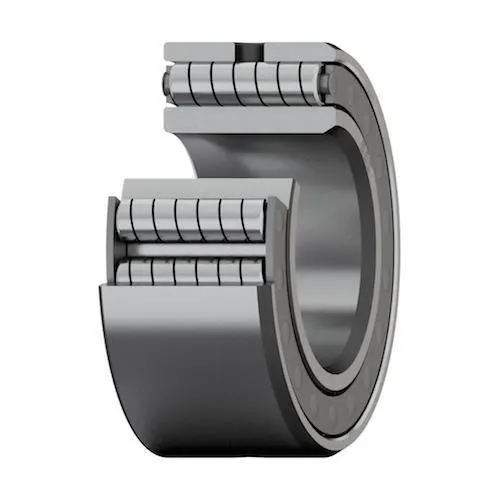
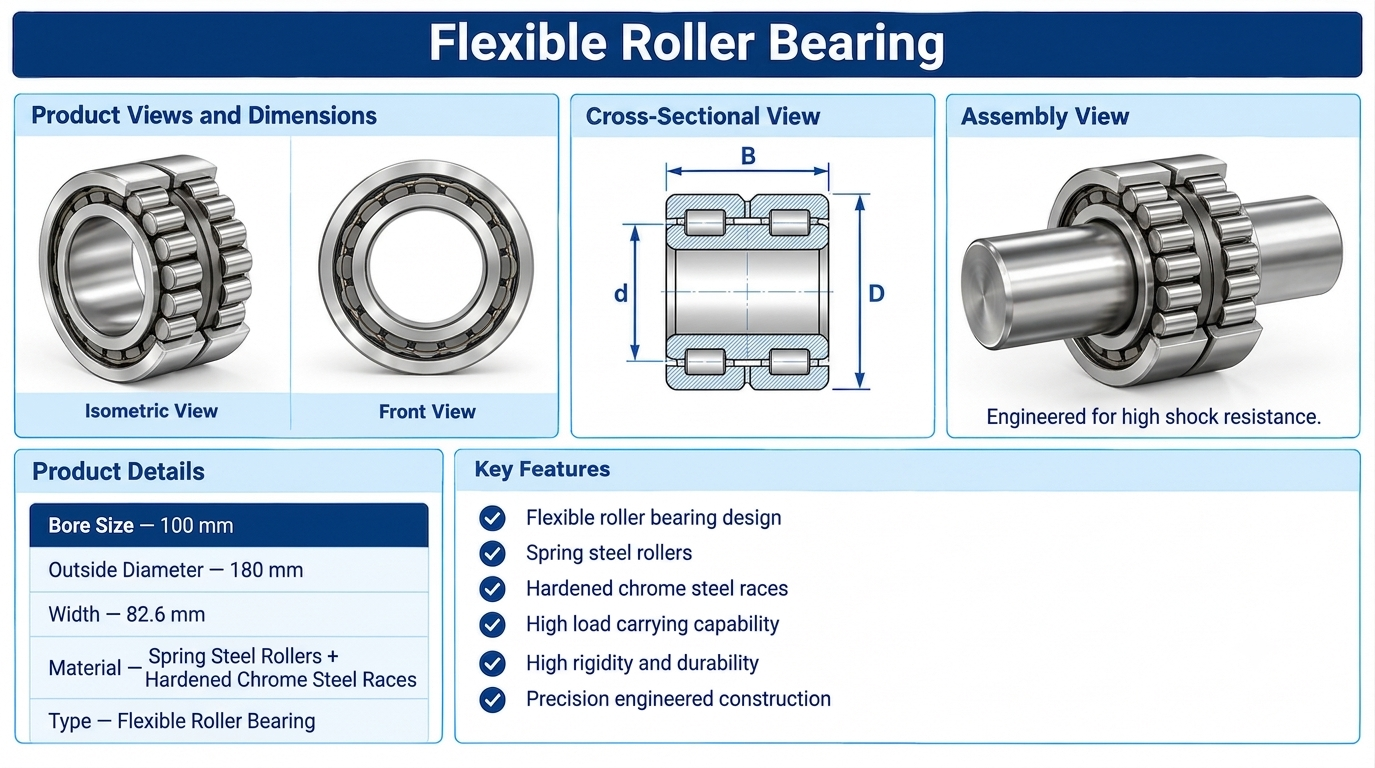
| Product Details | Specification |
|---|---|
| Bore Size | 100 mm |
| Outside Diameter | 180 mm |
| Width | 82.6 mm |
| Material | Spring Steel Rollers + Hardened Chrome Steel Races |
| Type | Flexible Roller Bearing |
What Is a Flexible Roller Bearing?
A flexible roller bearing is made to keep working well even when the shaft is not perfectly straight, or when the machine frame flexes slightly under load. Many machines, especially long conveyors, farm equipment, and vibrating screens, naturally have some shaft bend or frame movement during operation. A rigid, fixed bearing in that spot would wear out quickly, but this type of bearing simply adjusts itself a small amount to match the shaft angle.
This self-adjusting action comes from one of two designs: a spherical, barrel-shaped roller path that lets the inner ring rock slightly inside the outer ring, or a mounted housing (called a pillow block or flange unit) that can pivot a little where it bolts to the frame. Both designs are described as self-aligning, meaning the bearing lines itself up with the shaft automatically instead of needing perfect factory alignment.
A full self-aligning support assembly usually has two matched parts: the rolling element with its curved seat, and the housing or shaft collar that lets the whole unit settle into place during the first few hours of running. Engineers sometimes call this settling process bedding-in, and it is completely normal — a small amount of initial movement is expected as the rollers and seat find their natural position under load. Checking alignment again after the first week of operation is good practice on any new installation.
Flexible Roller Bearing vs Rigid Roller Bearing: What Is the Difference?
A rigid roller bearing holds the shaft in one fixed line and needs the housing bore and shaft to be lined up almost perfectly, or it wears out fast and runs hot. A flexible, self-aligning bearing is built to forgive a small amount of angular error — usually a couple of degrees — without extra stress on the rollers. This makes it the safer choice for long shafts, older machine frames, or equipment installed on a slightly uneven base.
Types of Flexible Roller Bearings
These self-aligning support bearings are grouped by their build, since each design suits a different mounting situation:
- Spherical Self-Aligning Roller Bearing: This uses barrel-shaped rollers running on a curved outer raceway, letting the inner ring tilt slightly inside the outer ring. It carries heavy load and is common in crushers, vibrating screens, and paper mill rollers.
- Flexible Insert (Sleeve-Fit) Roller Bearing: Here the inner ring has a slightly rounded outer surface that sits inside a spherical seat, giving the same self-aligning action in a smaller, lower-cost package. It is common in farm machinery and light conveyor lines.
- Mounted Pillow Block Unit: This is a complete mounted unit — bearing plus housing — bolted straight onto the machine frame. The housing itself allows a small amount of tilt, which is useful when the shaft cannot be perfectly lined up during installation.
- Mounted Flange Unit: Similar to the pillow block, but bolted to a vertical wall or frame face instead of resting on top of a base. These units are common where a shaft passes through a partition or panel.
Flexible Roller Bearing: Part Numbers, Sizes & Applications
The table below shows common series of these self-aligning bearings, their typical size range, and where each type is generally used. Share your shaft size and expected misalignment with our technical team for an exact match.
| Part Number |
Bore (mm) |
Outer Dia. (mm) |
Height (mm) |
Bearing Type | Typical Application |
|---|---|---|---|---|---|
| SB 204 | 20 | 47 | 31 | Flexible Insert Roller Bearing | Agricultural thresher shaft support |
| SB 206 | 30 | 62 | 38 | Flexible Insert Roller Bearing | Conveyor idler roller support |
| 22208 E | 40 | 80 | 23 | Spherical Self-Aligning Roller Bearing | Textile machine drive shaft, mild misalignment |
| 22315 E | 75 | 160 | 55 | Spherical Self-Aligning Roller Bearing | Vibrating screen, crusher feeder shaft |
| UCFL 205 | 25 | 52 | 34 | Flexible Roller Bearing Flange Unit | Wall-mounted conveyor shaft support |
| UCP 210 | 50 | 90 | 43 | Flexible Roller Bearing Pillow Block | Pump and fan shaft support, mild shaft flex |
Benefits of Choosing the Right Flexible Roller Bearing
- Forgives Shaft Misalignment: Small installation or frame errors do not cause early failure, which helps site teams in South Africa and Egypt fit equipment faster.
- Handles Frame Flex Under Load: Long conveyor and screening equipment that bends slightly under weight still runs smoothly, useful for plants in Indonesia and Thailand.
- Reduces Vibration and Noise: Flexible roller bearings action absorbs small shaft wobble, keeping pumps and fans quieter in the UAE and Kuwait.
- Simple, Fast Replacement: Mounted pillow block and flange units bolt on directly, cutting maintenance time for factories in Nigeria and Sri Lanka.
- Wide Size Range Available: Standard series make it easy to match an existing housing or shaft, even on older or imported machinery.
- Lower Installation Cost: Because small misalignment is forgiven, site teams spend less time on precise shimming and laser alignment during setup.
Where Flexible Roller Bearings Are Used Across Our Export Markets
- Sri Lanka: Tea and rubber processing lines use self-aligning mounted bearings on long conveyor shafts that flex slightly under continuous load.
- South Africa: Mining screens and crusher feeders rely on spherical self-aligning bearings to handle constant vibration and heavy shock load.
- UAE: HVAC fan shafts and building service pumps use flexible pillow block units where perfect factory alignment is hard to guarantee on site.
- Nigeria: Generator cooling fans and borehole pump shafts use self-aligning units to keep running despite uneven foundation settling.
- Egypt: Irrigation pump stations and textile machinery use flexible insert bearings on shafts that see frequent start-stop cycles.
- Indonesia: Palm oil mill conveyors and crushing lines use spherical roller units to survive constant vibration and heavy, shifting load.
- Thailand: Rice mill and packaging line conveyors use flange-mounted flexible units where shafts pass through multiple support walls.
- Kuwait: Oil and gas site conveyors and cooling fan shafts use self-aligning bearings to handle heat, dust, and small structural movement.
- Worldwide: Wherever a shaft is long, a frame flexes under load, or perfect alignment is hard to achieve, a self-aligning bearing keeps the machine running safely.
How to Select the Right Flexible Roller Bearing
- Estimate the Expected Misalignment: Check how many degrees the shaft may be out of line, since this decides how much self-aligning range you need.
- Measure Bore, Outer Diameter, and Height: These three sizes, taken from the shaft and housing, are needed to match a correct bearing series.
- Choose Mounted or Plain Type: A pillow block or flange unit suits quick on-site fitting, while a plain bearing suits a machined housing already built into the equipment.
- Plan the Lubrication: Flexible roller bearings still need a steady supply of clean grease or oil, so confirm your lubrication method before final selection.
Common Mistakes to Avoid When Choosing a Flexible Roller Bearing
- Over-Estimating the Misalignment Range: Every design has a maximum safe tilt angle, and pushing beyond it causes fast wear even on a flexible bearing.
- Ignoring Housing Fit: A mounted unit still needs its base bolted down firmly, or vibration can loosen the fixing over time.
- Skipping Shaft Condition Checks: A worn or scored shaft can stop the self-aligning seat from tilting smoothly, even with a brand-new bearing fitted.
- Using the Wrong Lubricant for Conditions: Dusty or wet sites need a grease grade with proper sealing, not a general-purpose type meant for clean indoor use.
Simple Maintenance Tips for Longer Life
Check the mounting bolts on any pillow block or flange unit regularly, since a loose base is one of the most common causes of early failure. Listen for a steady, even hum during normal running — an irregular knock or squeal often means the self-aligning seat is dirty or worn. Keep to the recommended greasing schedule, and wipe away old, dark grease before adding fresh grease so dirt is not pushed back into the rollers.
Get a fast export quote for Flexible roller bearings from Shree Balaji Export — reliable delivery to Sri Lanka, South Africa, UAE, Nigeria, Egypt, Indonesia, Thailand, Kuwait and worldwide.
Frequently Asked Questions
It supports a shaft that is slightly out of line or a frame that flexes under load, letting the shaft keep turning smoothly without extra wear or noise.
A normal roller bearing needs the shaft and housing lined up almost perfectly, while this type can adjust itself to a small amount of misalignment without added stress.
Most spherical designs allow up to a few degrees of angular movement, though the exact safe range depends on the specific bearing series chosen.
Yes. Regular grease or oil keeps friction low and protects the self-aligning seat, especially in dusty or heavy-load conditions.
Shree Balaji Export supplies self-aligning and flexible mounted bearing units to Sri Lanka, South Africa, the UAE, Nigeria, Egypt, Indonesia, Thailand, Kuwait, and other markets worldwide, with full export documentation and reliable delivery.
Common signs include a knocking or squealing noise, visible looseness in the housing, uneven wear on the roller path, and grease leakage found during inspection.
 Shree Balaji Exports
Specialize in delivering top-quality bearings and related solutions to meet the diverse needs of various industries.