How Sri Lankan Marine Equipment Buyers Can Source Propeller Shaft Bearings from India
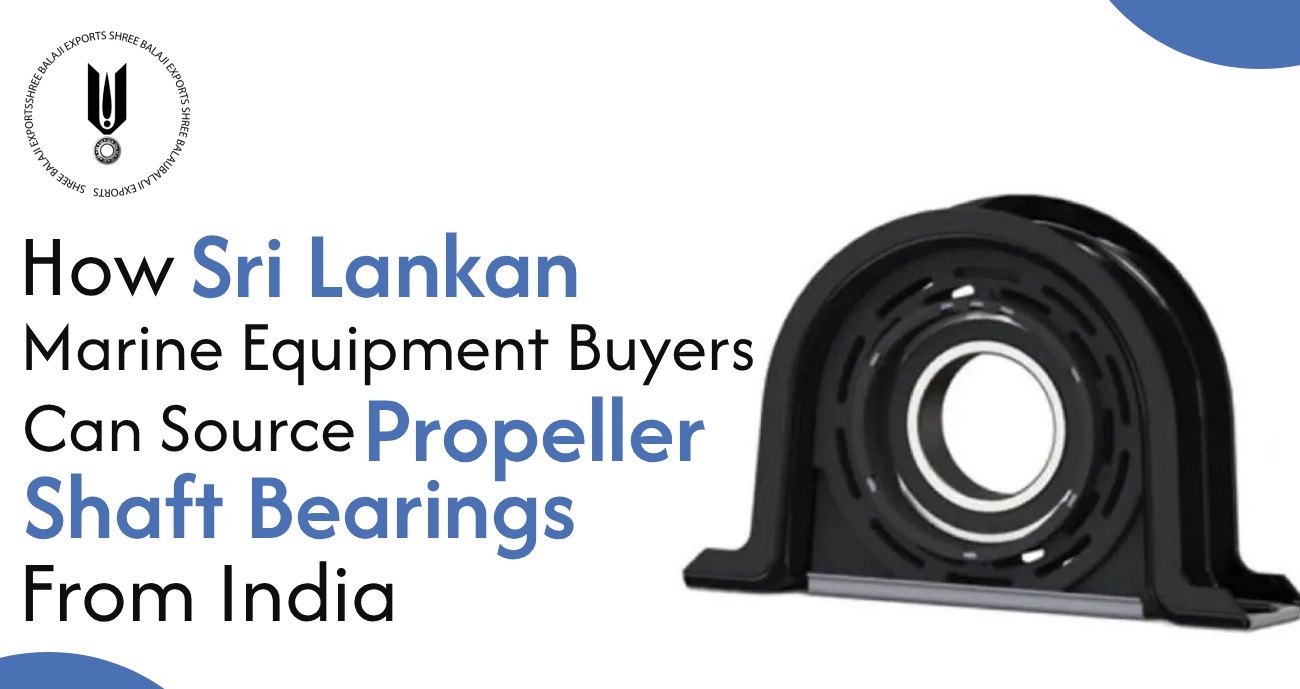
Sri Lanka is an island nation, so boats and ships are part of everyday life here — from small fishing vessels along the coast of Negombo and Beruwala, to larger cargo ships passing through Colombo Port. Every one of these vessels depends on a part that most people never see or think about: the propeller shaft bearing. Without it, a boat's propeller simply couldn't turn the way it needs to
If you run a boatyard, a marine repair workshop, or a shipping support business in Sri Lanka, you already know how hard it can be to find good-quality propeller shaft bearings quickly. Many buyers are now turning to India for these parts. In this article, we'll explain what this small but essential part actually does, why sourcing from India makes sense, and how Shree Balaji Exports supports Sri Lankan marine buyers with dependable supply.
What Is a Propeller Shaft Bearing?
On any boat or ship, the propeller shaft is the long rod that connects the engine to the propeller. As the engine turns, the shaft spins, and the propeller pushes the vessel through the water. This shaft passes through the hull of the boat and needs support along its length so it doesn't wobble, bend, or wear out the surrounding parts.
That support comes from this bearing. It holds the shaft steady while still letting it rotate freely. Without a proper bearing, the shaft would rub against its housing, causing vibration, noise, water leakage, and eventually serious damage to the engine or the hull itself.
Because these bearings work underwater or in constantly wet, salty conditions, they are built differently from bearings used in cars or factory machines. Many are designed to be lubricated by water itself, while others use rubber or special sealed designs to keep saltwater and grit away from the moving parts.
Why This Small Part Matters So Much for Sri Lankan Vessels
Sri Lanka's coastal waters and busy shipping lanes mean vessels here work hard, often in tough conditions. Saltwater is naturally corrosive, and fine sand or silt near the coast can work its way into moving parts over time. A poor-quality or mismatched bearing wears out fast under these conditions, which can lead to:
- Unwanted vibration that makes the whole boat shake at speed
- Water leaking into the hull through a worn shaft seal
- Extra strain on the engine, which can shorten its working life
- Sudden breakdowns that leave a vessel stranded at sea
For fishing boat owners, ferry operators, and shipping companies alike, a reliable one isn't just a small spare part — it's something that affects safety, fuel efficiency, and how often a vessel needs to come out of the water for repairs.
Why Sri Lankan Marine Buyers Are Sourcing Propeller Shaft Bearings from India
India has a well-established marine and industrial bearing supply network, and many Sri Lankan boatyards and repair shops now prefer sourcing from there instead of relying only on local stock or waiting on slow European shipments. Here's why.
Marine-grade bearings suited to local conditions.Bearings designed for saltwater and sandy conditions need the right rubber compound, sealing, or bronze construction to last. Indian exporters supply marine-specific bearing types built to handle exactly these demands, rather than repurposed industrial parts that wear out too quickly in water.
Access to trusted international brands. Many buyers assume marine parts sourced through India are locally manufactured and lower quality. That's usually not the case. Reputable exporters supply well-known bearing brands used across the marine industry worldwide, giving Sri Lankan buyers the same quality level found in larger shipping hubs.
Competitive pricing without long wait times. Ordering parts directly from European marine suppliers can mean high shipping costs and long delivery windows. Indian exporters are often able to offer comparable quality at more reasonable prices, with shorter shipping times to Sri Lanka.
Support for both small boatyards and larger shipping operations.Whether you need a single bearing for a fishing boat repair or a bulk order for a fleet of vessels, established exporters can handle both single-part requests and larger recurring orders.
Help identifying the right bearing, even without a part number. Marine bearings vary a lot in size, material, and design. A good supplier can help match the correct bearing using the shaft diameter, boat type, and application details, even if you don't already have an exact reference number.
Common Bearing Brands Used in Propeller Shaft and Marine Applications
Not every bearing brand focuses on marine use, but several globally recognized names are widely trusted across marine and industrial applications, including propeller shaft support. Here's a quick look at some of the most common ones supplied for these needs:
- SKF-A globally known brand recognized for a wide range of bearing types, including designs suited to demanding, harsh-condition applications such as marine equipment.
- FAG-Known for solid engineering and durability, FAG bearings are commonly used across heavy-duty industrial and marine machinery.
- Timken-Particularly well known for roller bearings that handle heavy loads, making them a common choice in larger marine and shipping equipment.
- NSK-A trusted name offering a broad range of bearing types, often chosen for their consistent quality across industrial and marine uses.
- NTN-Known for precision manufacturing, NTN bearings are used in various rotating equipment, including marine drive systems.
- Koyo-A dependable option for standard rotating machinery, sometimes used in supporting marine equipment components.
When buying one, it helps to confirm not just the brand, but also whether the specific bearing model is genuinely designed for marine or wet-running conditions, since not every bearing from a trusted brand is automatically suited to underwater use.
What to Check Before Ordering These Bearings
Before placing an order, it's worth confirming a few details to avoid receiving the wrong part:
- Shaft diameter– The exact measurement of the propeller shaft where the bearing will sit.
- Bearing material– A small fishing boat and a larger cargo vessel often need very different bearing specifications.
- Vessel type and usage– A small fishing boat and a larger cargo vessel often need very different bearing specifications.
- Existing bearing reference, if available– A part number, brand, or even a photo of the worn bearing helps confirm an exact match.-
- Required quantity-Useful for boatyards or repair shops that need to stock multiple sizes at once
Sharing these details upfront with a supplier usually leads to a faster, more accurate quotation.
How Shree Balaji Exports Supports Sri Lankan Marine Buyers
Shree Balaji Exports has built genuine, hands-on experience supplying industrial and marine bearings to workshops, distributors, and equipment buyers across several international markets, including an established presence in Sri Lanka, South Africa, the UAE, Nigeria, Egypt, Indonesia, Thailand, and Kuwait. This kind of multi-country experience means the company understands not just how to source the right bearing, but also how to ship it safely and get it through customs without unnecessary delays.
For Sri Lankan boatyards, repair workshops, and marine equipment buyers, Shree Balaji Exports offers:
- A range of bearing types suited to propeller shafts and other marine rotating equipment
- Access to well-known international brands, including SKF, FAG, Timken, NSK, and NTN
- Support for both single-part orders and larger bulk requirements
- Guidance in identifying the correct bearing using shaft dimensions and vessel details, even without a part number
- Export packaging designed to protect parts during shipping
- Clear documentation to help avoid delays at Sri Lankan ports
Whether you're maintaining a single fishing vessel or managing a fleet, Shree Balaji Exports aims to make sourcing these parts simple and dependable, so vessels spend less time out of the water and more time doing what they're meant to do.
Conclusion
A propeller shaft bearing may be a small, hidden part, but it plays a direct role in how safely and smoothly a vessel runs, whether it's a single fishing boat or part of a larger shipping fleet. Choosing the right bearing, made from the correct material and matched to the exact shaft size, helps prevent leaks, vibration, and costly engine strain. With genuine, hands-on expertise and an established international presence, Shree Balaji Exports brings dependable, experience-backed sourcing to marine buyers — and that combination of real-world reliability and product knowledge is what positions this content, and Shree Balaji Exports' services, to rank well for anyone searching for trustworthy marine bearings.
Don't Let a Worn-Out Bearing Keep Your Vessel Docked
A vessel stuck at the yard waiting on this small part is a vessel that isn't earning, isn't fishing, and isn't moving cargo or passengers where they need to go. Whether you're repairing a single boat or managing supply for an entire fleet, Shree Balaji Exports is ready to help you source genuine, marine-grade propeller shaft bearings quickly, at a price that makes sense for your business. Share your shaft diameter, vessel type, or even just a photo of the worn bearing, and our export team will respond with clear pricing and honest timelines — no confusing jargon, no long delays, just straightforward support for getting the right marine bearings to your workshop or boatyard in Sri Lanka.
Get Your Free Propeller Shaft Bearings Quote Today — Talk to Our Marine Parts Export Team
Frequently Asked Questions
It supports the propeller shaft as it spins, keeping it steady and properly aligned while allowing smooth rotation. Without it, the shaft would wobble, causing vibration, leaks, and damage over time.
This depends on usage, water conditions, and bearing quality, but regular inspection during routine maintenance helps catch wear early, before it leads to bigger problems or unexpected breakdowns
Yes. Sharing the shaft diameter, vessel type, and a photo of the existing bearing is usually enough for a knowledgeable supplier to identify the correct match.
Yes, when the correct marine-specific bearing type is selected. Materials like bronze or rubber-lined designs are commonly used because they hold up well against saltwater and constant wet conditions.
Yes. Suppliers experienced in marine parts typically support both single-unit orders for individual repairs and larger bulk orders for boatyards or fleet operators needing ongoing stock.
 Shree Balaji Exports