Tapered Roller Bearings vs Other Bearings
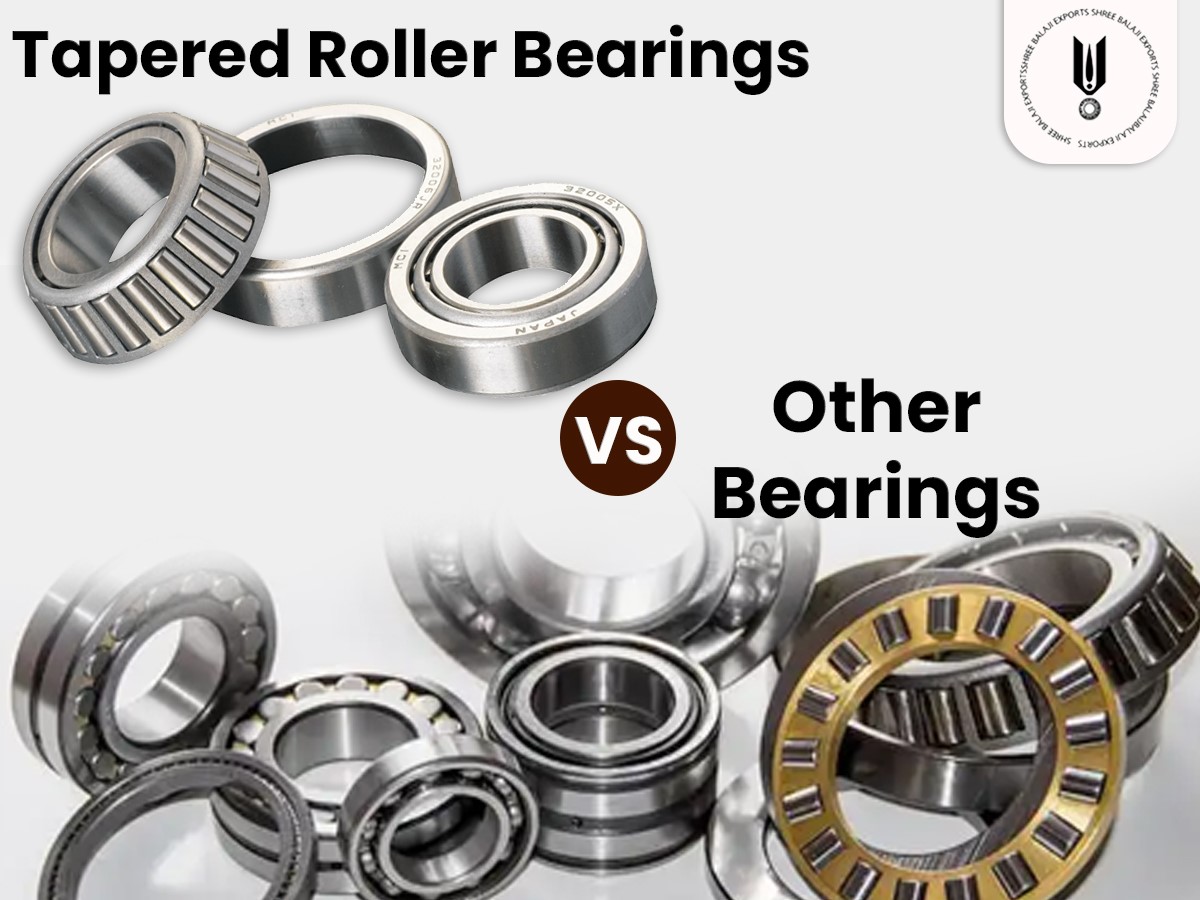
In 2026, bearing selection is no longer just about size or brand—it is about load direction, operating efficiency, and long-term reliability. As industries evolve toward electrification, automation, and higher performance standards, understanding how different bearings handle loads has become a critical engineering and purchasing decision.
Among all bearing types, tapered roller bearings stand out for their ability to manage complex load conditions. When compared with ball bearings, cylindrical roller bearings, and spherical bearings, one key differentiator consistently determines performance: load direction.
Understanding Load Direction in Bearing Applications
Load direction refers to how forces act on a bearing during operation.
These forces are typically classified as:
- Radial loads – perpendicular to the shaft
- Axial (thrust) loads – parallel to the shaft
- Combined loads – a mix of radial and axial forces
In modern machinery—especially EV drivetrains, heavy equipment, wind energy systems, and high-speed gearboxes— combined loads are increasingly common. Bearings that cannot effectively manage these forces face premature wear, misalignment, and failure.
What Makes Tapered Roller Bearings Different?
These bearings are uniquely designed with conical rollers and raceways, allowing them to handle both radial and axial loads simultaneously. The geometry ensures that load forces are distributed evenly along the rollers, improving durability and stability.
Key characteristics:
- High load-carrying capacity
- Excellent axial and radial load handling
- Superior stiffness and alignment control
- Long service life under heavy-duty conditions
This design advantage makes these bearings especially relevant in 2026, where machinery is expected to operate under higher stress with minimal downtime.
Tapered Roller Bearings vs Ball Bearings
Ball bearings are commonly used for their low friction and high-speed capability. However, they are best suited for light to moderate radial loads with limited axial force.
Comparison:
- Ball bearings:
- Best for high-speed, low-load applications
- Limited axial load capacity
- Tapered roller bearings:
- Ideal for heavy combined loads
- Better shock and impact resistance
In applications like automotive wheel hubs, gearboxes, and industrial transmissions, these bearings outperform ball bearings when load direction is not purely radial
Tapered Roller Bearings vs Cylindrical Roller Bearings
Cylindrical roller bearings excel in handling very high radial loads, but they are not designed to support axial forces unless paired with additional components.
Comparison:
- Cylindrical roller bearings:
- Excellent radial load capacity
- Poor axial load handling
- Tapered roller bearings:
- Handle radial and axial loads together
- Reduce system complexity
In 2026, as compact designs and integrated systems become more common, tapered roller bearings offer a more efficient solution where space and performance must coexist.
Tapered Roller Bearings vs Spherical Roller Bearings
Spherical roller bearings are known for their ability to accommodate misalignment, making them suitable for rough operating environments.
Comparison:
- Spherical roller bearings:
- Tolerate shaft misalignment
- Slightly lower efficiency
- Tapered roller bearings:
- Higher precision and stiffness
- Better for controlled alignment systems
In precision-driven industries such as EV platforms and automated manufacturing, tapered roller bearings are often preferred where alignment is controlled and efficiency is critical.
Why Load Direction Matters More in 2026
Several industry trends are making load direction a decisive factor:
1. Electrification of Machinery
Electric motors generate instant torque, increasing axial and radial stress on bearings. these bearings are better suited to handle these combined loads.
2. Higher Efficiency Expectations
Energy efficiency regulations and operating cost pressures demand bearings that minimize friction and heat while handling heavy loads.
3. Compact and Integrated Designs
Modern equipment combines multiple functions into smaller spaces. Bearings must manage complex load paths without additional support components.
4. Reduced Maintenance Tolerance
Downtime is costly. Bearings must last longer and perform reliably under variable load conditions.
Common Applications Driving Demand in 2026
these bearings are increasingly used in:
- Automotive and EV wheel hubs
- Industrial and planetary gearboxes
- Construction and mining equipment
- Wind turbines and power transmission systems
- Heavy-duty axles and drivetrains
These applications share one common requirement: effective handling of combined load directions.
How Buyers Should Choose the Right Bearing
In 2026, buyers and engineers should evaluate:
- Load direction and magnitude
- Speed and torque requirements
- Alignment conditions
- Space constraints
- Total lifecycle cost
Selecting the wrong bearing type—even if it is cheaper upfront—can lead to higher maintenance costs and equipment failure.
Final Thoughts: Load Direction Is No Longer Optional
The comparison between tapered roller bearings and other bearing types highlights one clear conclusion: load direction matters more than ever in 2026. As machinery becomes more powerful, efficient, and compact, bearings must handle increasingly complex forces.
These bearings offer a balanced solution for modern industries—delivering strength, precision, and durability where combined loads are unavoidable. For buyers and engineers planning future-ready systems, understanding load direction is not just good engineering—it is a competitive advantage.
Get in Touch with Our Export Team for Tapered Roller Bearings Worldwide
Email: balajibearingco.16@gmail.com
Website: https://shreebalajiexport.in/
You can reach out directly to inquire or request a quote for Tapered Roller Bearings.
FAQs
Load direction determines how forces act on a bearing during operation. In 2026, modern machinery experiences higher torque, combined loads, and continuous operation, making correct load handling essential to prevent premature wear and equipment failure.
These bearings are designed to handle combined radial and axial loads simultaneously, making them ideal for heavy-duty and high-torque applications.
Ball bearings are best for light radial loads and high-speed operation, these bearings offer superior performance under heavy combined loads, providing better durability and alignment control.
These bearings are better for applications with both radial and axial loads. Cylindrical roller bearings are more suitable for high radial loads only and typically require additional components to manage axial forces.
Spherical roller bearings are preferred when shaft misalignment is unavoidable. These bearings are ideal when alignment is controlled and precision, stiffness, and efficiency are priorities.
 Shree Balaji Exports