Why Indonesia's Palm Oil Industry Relies on Indian Forklift Bearings
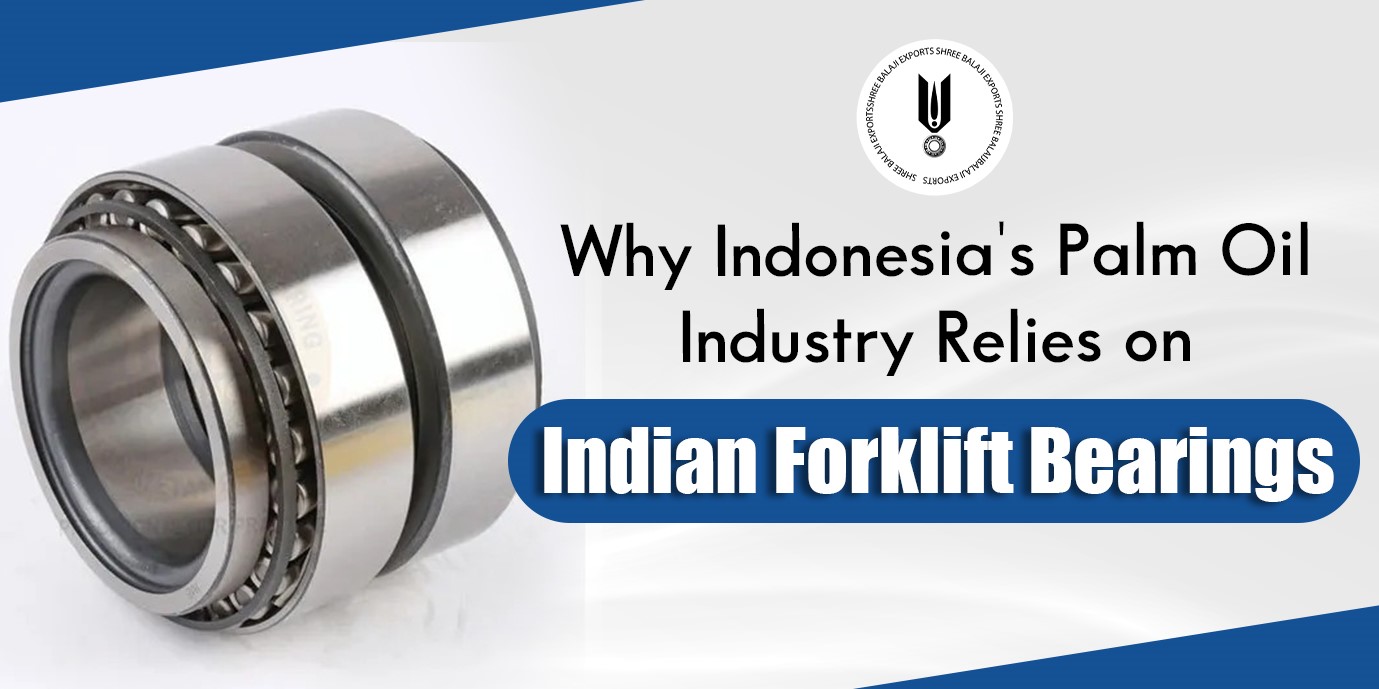
Indonesia produces more palm oil than any other country in the world, and behind every shipment of crude palm oil or refined product lies a long chain of hard, physical work — from harvesting fresh fruit bunches on the plantation to processing them at busy mills and finally loading them for export. Forklifts sit right in the middle of that chain, moving bunches, drums, and packaged goods around plantations, mills, and storage yards all day long. And tucked inside every one of those forklifts is a small part that quietly keeps everything turning: the forklift bearing.
It's easy to overlook something this small, but ask anyone running a palm oil mill what happens when a forklift breaks down mid-shift, and you'll hear a very different story. Over the last several years, more Indonesian palm oil companies have started buying this component from Indian manufacturers instead of their usual suppliers. This article looks at why that shift is happening, what makes palm oil operations so tough on equipment, and what buyers should look for when choosing a supplier they can actually count on.
What Exactly Is a Forklift Bearing?
Put simply, this is the part that lets the moving sections of a forklift — the mast, the wheels, the steering — turn or slide smoothly while carrying heavy loads. In a palm oil operation, forklifts rarely get an easy day. They're hauling loaded pallets, drums of crude oil, or sacks of processed product across yards that are often muddy, oily, and humid, sometimes for twelve or more hours a shift. That kind of constant, heavy use puts real pressure on these components, both from the weight they carry and the sideways forces from turning and lifting.
You'll find this part doing its job in several places on a forklift, including:
- The mast assembly, which raises and lowers heavy loads throughout the day
- The wheels, which carry the machine's full weight across yards and mill floors
- The steering system, which needs to stay smooth even after thousands of tight turns
- The drive components on both diesel forklifts common at larger mills and electric models used indoors
Because palm oil facilities run their equipment so hard, even a slightly inferior part can wear out far sooner than it should — and that usually shows up at the worst possible time, in the middle of a busy processing run.
Why Palm Oil Operations Are So Tough on Equipment
If you've ever visited a palm oil mill, you'll know it's not exactly a gentle working environment. Humidity sits high almost year-round, oil and organic residue get into everything, and the ground around loading bays and storage areas is often uneven or slick. All of that adds up to conditions that wear down machinery components far quicker than they would in a clean, dry warehouse somewhere else.
When a forklift goes down at a mill during harvest season, it's not just an inconvenience — it can back up the entire intake process, leave fresh fruit bunches sitting longer than they should, and cost real money in lost processing time. That's exactly why plantation and mill managers have become much more particular about where their forklift bearing supply comes from, focusing less on the cheapest price tag and more on genuine, tested durability.
Why Indonesian Palm Oil Companies Are Turning to India
Indonesia's palm oil sector has traditionally bought parts from a range of countries, but Indian manufacturers have steadily earned a bigger share of that business, and for good reason.
- Prices that actually make sense
Indian manufacturers tend to charge less than European suppliers, without cutting corners on the material quality needed for heavy, continuous use. - Decades of manufacturing know-how
India has been producing precision parts for both its own market and export customers for a very long time, and that experience shows up in consistent, dependable quality batch after batch. - Shipping routes that actually work
Trade between India and Indonesia is well established, which means more predictable delivery windows compared to sourcing from more distant or less familiar regions. - A wide selection to choose from
Indian suppliers usually stock parts for a broad range of forklift brands and models, which is genuinely useful for palm oil companies running mixed fleets across several sites. - Room to test before committing
Many manufacturers are happy to send a smaller trial order first, letting buyers check the quality for themselves before placing a bigger, ongoing order.
Types of Forklift Bearings, Side by Side
| Type | Where You'll Find It | Why It Matters |
|---|---|---|
| Mast roller bearing | Lift mast assembly | Keeps heavy loads moving smoothly up and down |
| Wheel bearing | Wheel hubs | Handles the machine's full weight, shift after shift |
| Thrust bearing | Steering and mast tilt | Manages the sideways pressure from turning and tilting |
| Sealed heavy-duty bearing | Assemblies exposed to oil, dust, or moisture | Keeps contamination out in wet, oily plantation conditions |
Choosing the right type for a humid, oil-heavy plantation environment matters just as much as choosing a good manufacturer — a part built for a dry indoor warehouse simply won't hold up the same way out on a mill yard.
What to Look for When Choosing a Supplier
Not every manufacturer delivers the same level of reliability, so it's worth checking a few things before committing to a supplier:
- Real export experience, including familiarity with Indonesian customs paperwork and shipping requirements
- Consistent quality across every batch, not just the sample they send you to win the order
- A broad product range that covers different forklift brands and models
- Clear, responsive communication when you have questions about specifications or timing
- Realistic delivery timelines that account for both manufacturing and the shipping journey
- A willingness to start small, offering trial shipments before asking for a large commitment
Suppliers who tick these boxes tend to stick around as long-term partners rather than one-off vendors, which matters a lot when your operation depends on equipment that simply can't afford to sit idle.
Keeping These Parts Working Longer
Even a well-made part won't last forever without a bit of care, especially in a plantation or mill setting. A few habits go a long way:
- Stick to a regular lubrication routine, since oil and grease naturally break down faster in hot, humid conditions.
- Listen for unusual noise or vibration during routine checks — catching a problem early is always cheaper than replacing a failed part mid-shift.
- Keep seals and covers in good condition, since dust, moisture, and oil residue are constantly trying to work their way in.
- Avoid pushing equipment past its rated load, since palm oil products can be heavier and denser than they look.
- Train operators on smooth handling, because rough starts, stops, and turns wear parts down faster than steady, careful use.
None of this replaces sourcing a genuinely well-made part in the first place, but combined with a reliable supplier, it goes a long way toward avoiding surprise breakdowns.
The India-Indonesia Shipping Route
Shipping between India and Indonesia benefits from a long history of trade between the two countries, with regular sailings and well-understood documentation requirements on both ends. That maturity generally translates into fewer surprises at customs and more predictable delivery windows — something that matters enormously when you're planning around harvest and processing schedules.
Shree Balaji Export: A Name Trusted Across Global Markets
For Indonesian palm oil companies looking for a dependable source, Shree Balaji Export has built a solid reputation manufacturing and exporting reliable bearing solutions for the automotive, construction, and material handling equipment sectors — including forklifts that work hard in demanding agricultural and industrial settings. Years of hands-on experience have given the company a real understanding of what durability actually looks like under continuous, heavy-duty use.
What really sets Shree Balaji Export apart is just how far its reach extends. The company currently serves customers across Sri Lanka, South Africa, the UAE, Nigeria, Egypt, Indonesia, Thailand, Kuwait, and many other markets worldwide, which means it has genuine, practical experience with the different climates, equipment standards, and import requirements each of those regions brings. That kind of international exposure means Shree Balaji Export already understands export paperwork, customs expectations, and shipping logistics far better than a manufacturer focused only on selling at home.
Conclusion
The growing shift among Indonesian palm oil companies toward Indian manufacturers isn't just a passing trend — it comes down to a genuine, practical advantage in cost, consistency, and the ability to handle tough working conditions. Choosing the right forklift bearing supplier means looking past the cheapest quote and focusing on manufacturing quality, export experience, and a track record you can actually trust.
Shree Balaji Export brings well-rounded expertise in bearing solutions built for demanding agricultural, industrial, and material handling applications, backed by an established presence in Sri Lanka, South Africa, the UAE, Nigeria, Egypt, Indonesia, Thailand, Kuwait, and beyond. That mix of technical know-how and genuine international reach makes Shree Balaji Export a name businesses researching bearing suppliers can trust — the kind of depth and relevance that also helps this topic rank well for anyone searching for answers online.
Ready to Source Bearings That Can Keep Up With Your Operation?
Don't let a worn-out part slow down your mill or plantation during a busy season.Shree Balaji Export combines careful, precision manufacturing with real export experience across Indonesia and international markets worldwide, so every forklift bearing you receive is built to handle heat, humidity, and heavy daily use. Whether you'd like to start with a trial order to check the quality or you're ready for an ongoing bulk supply arrangement, our team is ready to match you with the right specification for your equipment.Get in Touch With Shree Balaji Export Today to request a quote and start building a supply chain that won't let you down.
Frequently Asked Questions
It comes down to a practical mix of fair pricing, consistent quality, and an established shipping route between the two countries, making Indian manufacturers a dependable alternative to costlier or less consistent options.
High humidity, oil and organic residue, and near-constant use all speed up wear, which is why manufacturing quality and proper sealing matter more here than in a typical dry warehouse.
Keep an ear out for unusual noise during lifting or movement, watch for rough or uneven motion, and check for visible wear or contamination during routine inspections. A worn forklift bearing often shows these warning signs well before it fails completely, so regular inspection really pays off.
Yes — most reputable Indian manufacturers are happy to send a smaller trial shipment first, so you can check quality and fit before committing to a larger order.
Warehousing, ports, general manufacturing, and mining all lean heavily on forklifts too, so the same sourcing approach benefits a lot more than just the palm oil sector.
 Shree Balaji Exports